Custom Software vs SaaS: Which Is Better for Your Business in 2026?
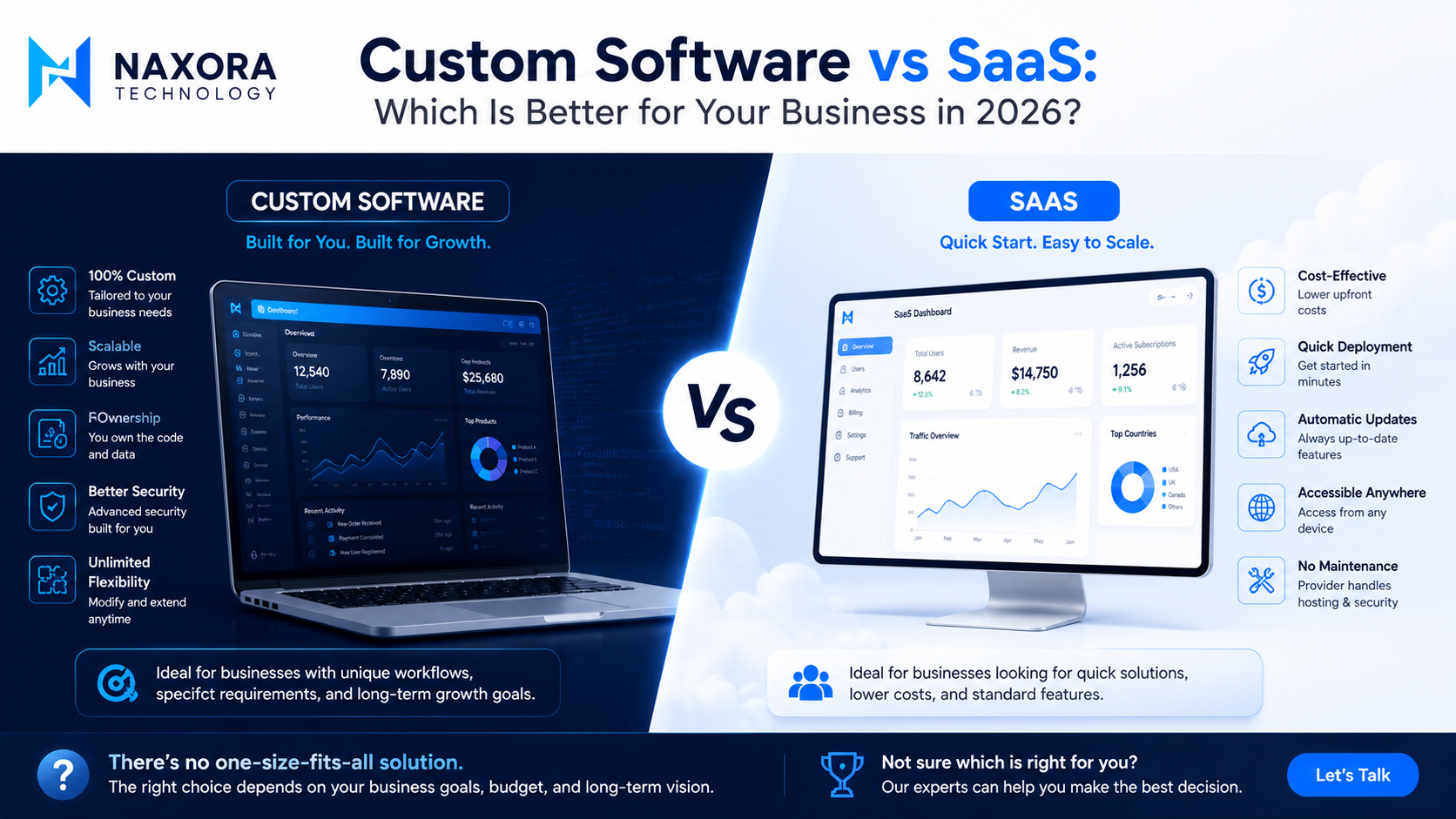
Custom Software vs SaaS: Which Is Better for Your Business in 2026?
Choosing the right software solution has become one of the most important decisions for businesses in 2026. Whether you're a startup, SME, or enterprise, selecting between Custom Software and Software as a Service (SaaS) can significantly impact your productivity, scalability, customer experience, and long-term costs.
While SaaS platforms offer convenience and quick deployment, custom software provides flexibility and complete control over your business processes. Understanding the strengths and limitations of each approach will help you make an informed decision.
What is SaaS?
Software as a Service (SaaS) is cloud-based software that users access through a web browser. Instead of purchasing software licenses, businesses pay a monthly or annual subscription fee.
Popular examples include CRM platforms, project management tools, accounting software, and communication applications.
Advantages of SaaS
Quick deployment
Lower upfront costs
Automatic updates
Cloud accessibility
Minimal IT maintenance
Limitations of SaaS
Limited customization
Recurring subscription costs
Vendor dependency
Data portability challenges
Features you don't use but still pay for
What is Custom Software?
Custom software is designed and developed specifically for your organization's workflows, goals, and business requirements. Unlike SaaS products built for a broad audience, custom applications solve your unique challenges.
Examples include ERP systems, inventory management software, customer portals, healthcare systems, fintech applications, logistics platforms, and AI-powered business solutions.
Advantages of Custom Software
Tailored to business needs
Unlimited scalability
Better security controls
Complete ownership
Competitive advantage
Easy integration with existing systems
Challenges of Custom Software
Higher initial investment
Longer development time
Requires ongoing maintenance
Custom Software vs SaaS: Feature Comparison
FeatureCustom SoftwareSaaSInitial CostHighLowMonthly CostLowRecurring SubscriptionCustomizationUnlimitedLimitedOwnershipCompleteVendor OwnedScalabilityHighly FlexibleDepends on VendorSecurityCustom Security PoliciesShared ResponsibilityIntegrationFully CustomLimited APIsCompetitive AdvantageHighLow
Cost Comparison
Many businesses choose SaaS because of its affordable monthly subscription. However, these recurring costs accumulate over time.
For example, paying $200 per month for multiple users equals over $12,000 in five years. As teams grow, licensing costs continue increasing.
Although custom software requires a larger upfront investment, it often becomes more cost-effective in the long run because businesses own the software and avoid recurring subscription fees.
When Should You Choose SaaS?
SaaS is the right option if your business:
Needs software immediately
Has a limited budget
Uses standard business processes
Has a small team
Doesn't require advanced customization
When Should You Choose Custom Software?
Custom software is ideal if your business:
Has unique workflows
Needs advanced automation
Plans for long-term growth
Requires enterprise-level security
Needs integration with multiple internal systems
Wants complete ownership of business data
Why More Businesses Are Choosing Custom Software in 2026
Businesses are increasingly investing in custom software because digital transformation now requires solutions tailored to specific operational challenges.
Modern technologies such as Artificial Intelligence, Machine Learning, cloud computing, and workflow automation are easier to implement in custom applications than traditional SaaS platforms.
Companies also value owning their technology stack instead of depending entirely on third-party vendors.
Final Verdict
There isn't a one-size-fits-all answer.
If your organization needs speed, affordability, and standard functionality, SaaS is an excellent choice.
If you're focused on scalability, competitive advantage, automation, security, and long-term ROI, custom software is often the better investment.
The right decision depends on your business goals, budget, operational complexity, and future growth plans.
Conclusion
Technology decisions should support your long-term business strategy rather than just solving today's challenges. Evaluating your operational needs, growth plans, and budget will help determine whether SaaS or custom software is the better investment.
If you're planning to build scalable, secure, and future-ready digital solutions, investing in custom software can provide lasting business value and a significant competitive advantage.