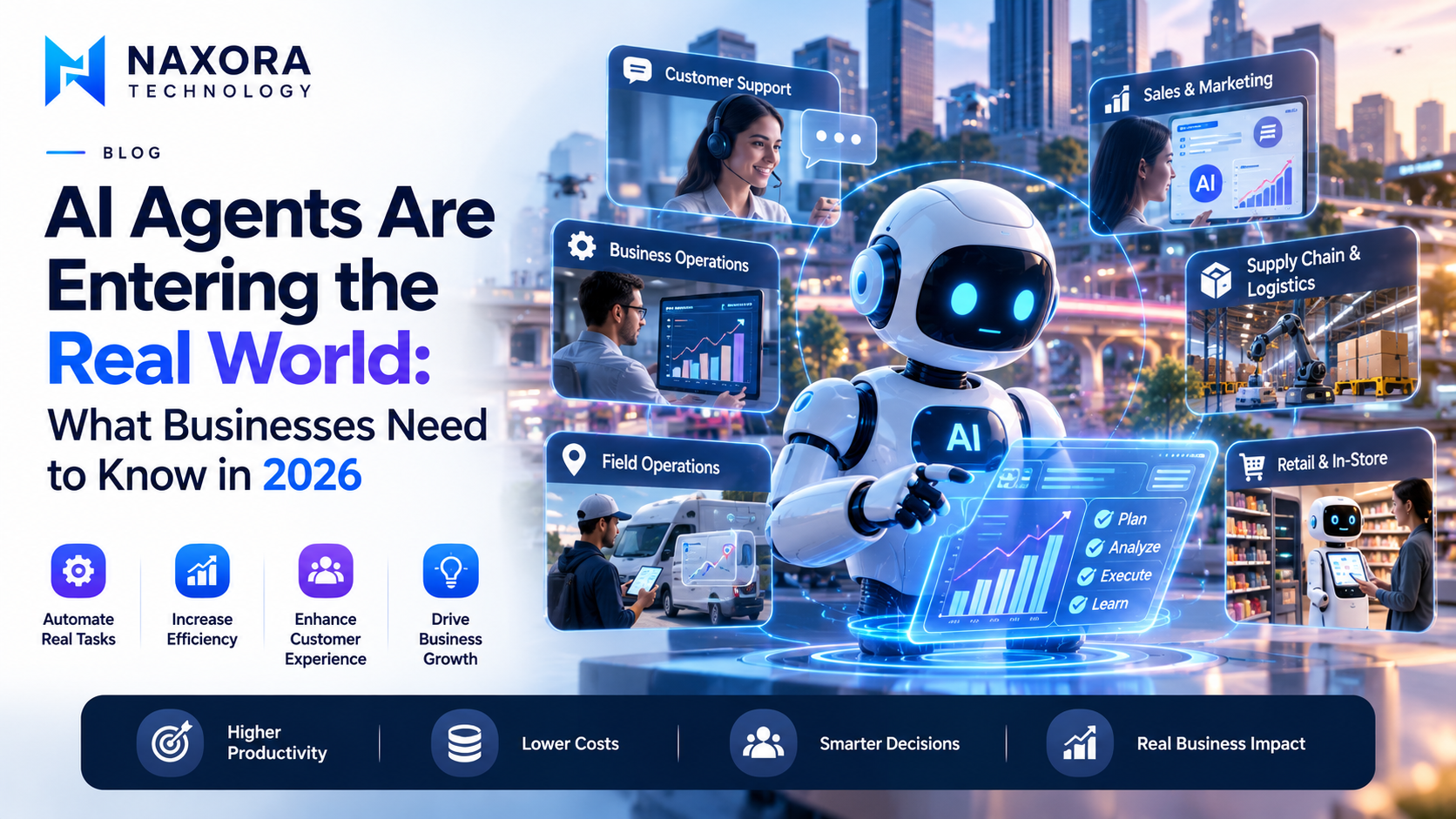
How AI Agents Are Changing Business Operations in 2026
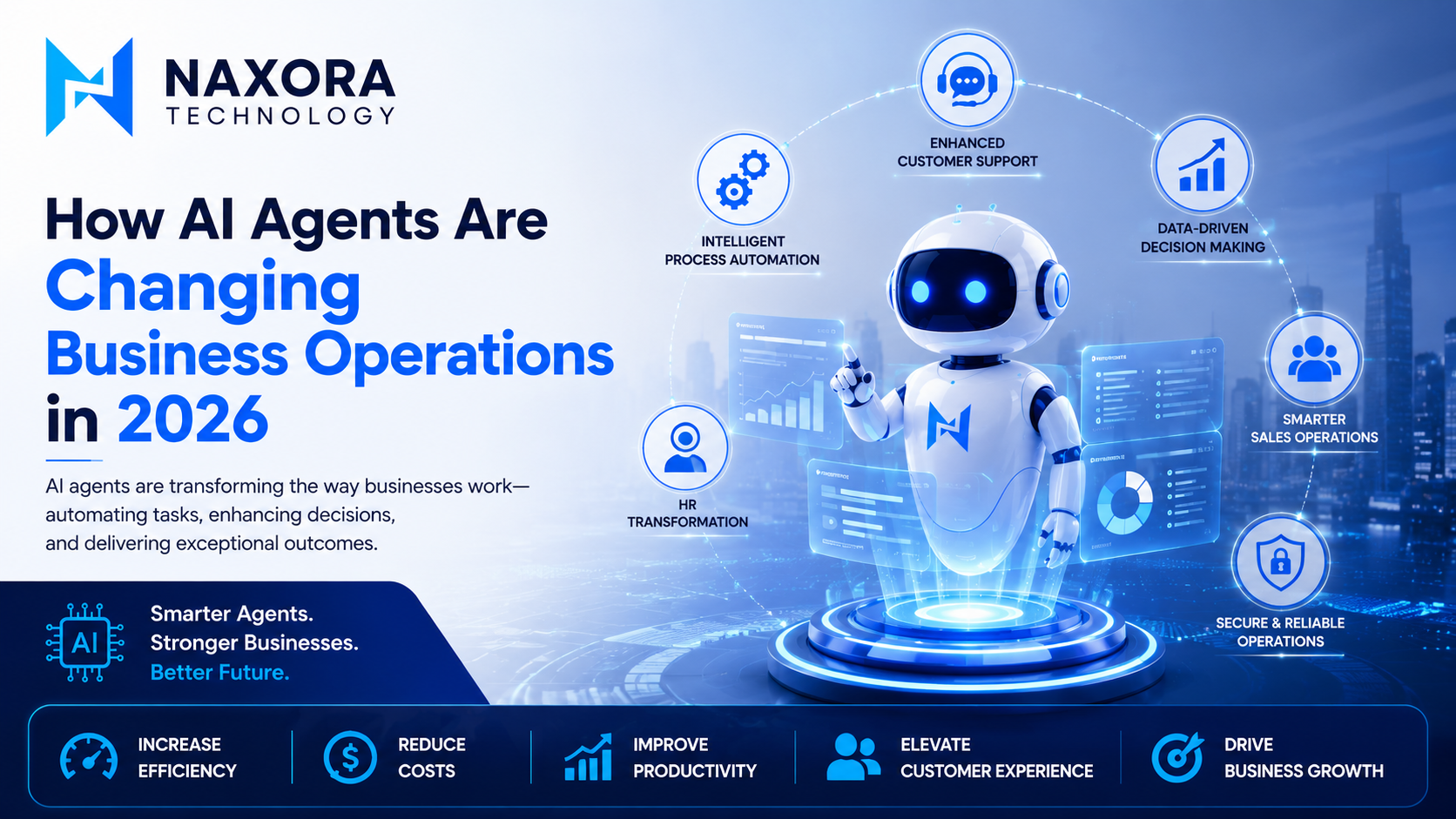
How AI Agents Are Changing Business Operations in 2026
Artificial Intelligence has evolved far beyond simple chatbots and automation tools. In 2026, AI agents have become an essential part of business operations, helping organizations streamline workflows, improve decision-making, reduce operational costs, and deliver customer experiences.
Unlike traditional AI systems that require constant human supervision, AI agents can independently perform tasks, collaborate with other systems, analyze data, and take action based on predefined goals. Businesses across industries are leveraging these intelligent digital to gain a competitive advantage in an increasingly fast-paced market.
What Are AI Agents?
AI agents are autonomous software systems designed to understand objectives, make decisions, and execute tasks with minimal human intervention. They can interact with business applications, databases, APIs, customers, and employees to complete complex workflows.
Modern AI agents combine:
Large Language Models (LLMs)
Workflow automation capabilities
Real-time data analysis
Memory and contextual understanding
Decision-making frameworks
Integration with enterprise software
These capabilities allow AI agents to function as virtual employees that continuously work across multiple business functions.
Key Ways AI Agents Are Transforming Business Operations
1. Intelligent Process Automation
Businesses are moving beyond basic automation toward intelligent automation powered by AI agents. Instead of handling repetitive tasks, AI agents can manage complete workflows from start to finish.
Examples include:
Processing invoices and purchase orders
Managing inventory updates
Generating business reports
Handling compliance documentation
Coordinating supply chain activities
This significantly reduces manual effort while improving accuracy and operational efficiency.
2. Enhanced Customer Support
Customer service teams are increasingly relying on AI agents to provide faster and more personalized support. Modern AI agents can understand customer intent, access relevant data, and resolve issues without human intervention.
Benefits include:
24/7 customer assistance
Instant query resolution
Multilingual support
Personalized recommendations
Reduced support costs
Human agents can focus on complex customer interactions while AI handles routine inquiries.
3. Data-Driven Decision Making
One of the most valuable capabilities of AI agents is their ability to analyze large volumes of business data in real time. Executives and managers can receive actionable insights without spending hours reviewing reports.
AI agents help organizations:
Identify market trends
Predict customer behavior
Forecast revenue and demand
Monitor operational performance
Detect risks and anomalies
This enables faster and more informed decision-making across departments.
4. Smarter Sales Operations
Sales teams are leveraging AI agents to improve productivity and increase conversion rates. AI-powered sales assistants can qualify leads, personalize outreach, schedule meetings, and provide sales recommendations.
Key advantages include:
Automated lead qualification
Personalized customer engagement
Pipeline management
Sales forecasting
Real-time performance insights
By automating administrative work, sales representatives can focus more on closing deals.
5. Human Resources Transformation
HR departments are adopting AI agents to streamline recruitment, onboarding, employee engagement, and workforce management.
Common applications include:
Resume screening
Candidate matching
Interview scheduling
Employee onboarding assistance
Internal knowledge support
These improvements help organizations hire faster while enhancing the employee experience.
The Rise of Multi-Agent Systems
In 2026, businesses are increasingly deploying multiple AI agents that collaborate to achieve organizational goals. These multi-agent systems function like digital teams, where each agent specializes in a specific role.
For example:
A sales agent identifies new opportunities
A marketing agent creates personalized campaigns
A customer support agent manages client inquiries
A finance agent monitors budgets and expenses
Together, these agents create highly efficient workflows that operate around the clock.
Benefits of AI Agents for Businesses
Cost Reduction: Lower operational expenses through automation.
Productivity: Faster execution of repetitive and complex tasks.
Scalability: Support business growth without proportional hiring.
Accuracy: Reduced human errors and improved consistency.
Customer Experience: Faster and more personalized interactions.
Decision Support: Real-time insights and predictive analytics.
Challenges Organizations Must Address
While AI agents offer substantial advantages, successful implementation requires careful planning.
Data privacy and security concerns
Integration with legacy systems
Governance and compliance requirements
Employee adoption and training
Monitoring AI decision quality