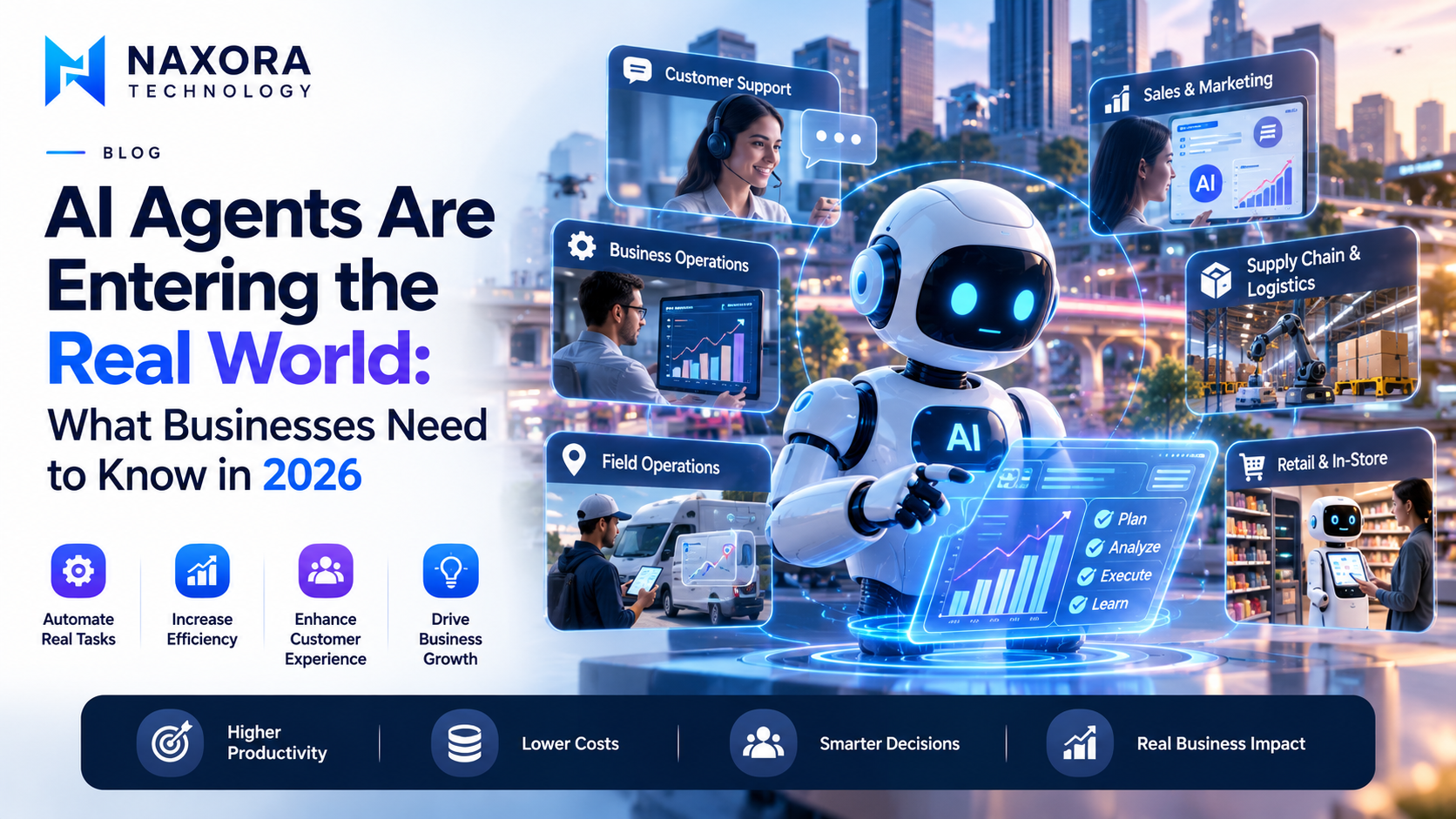
How AI Is Reshaping Software Development in 2026: What Every Business Should Know
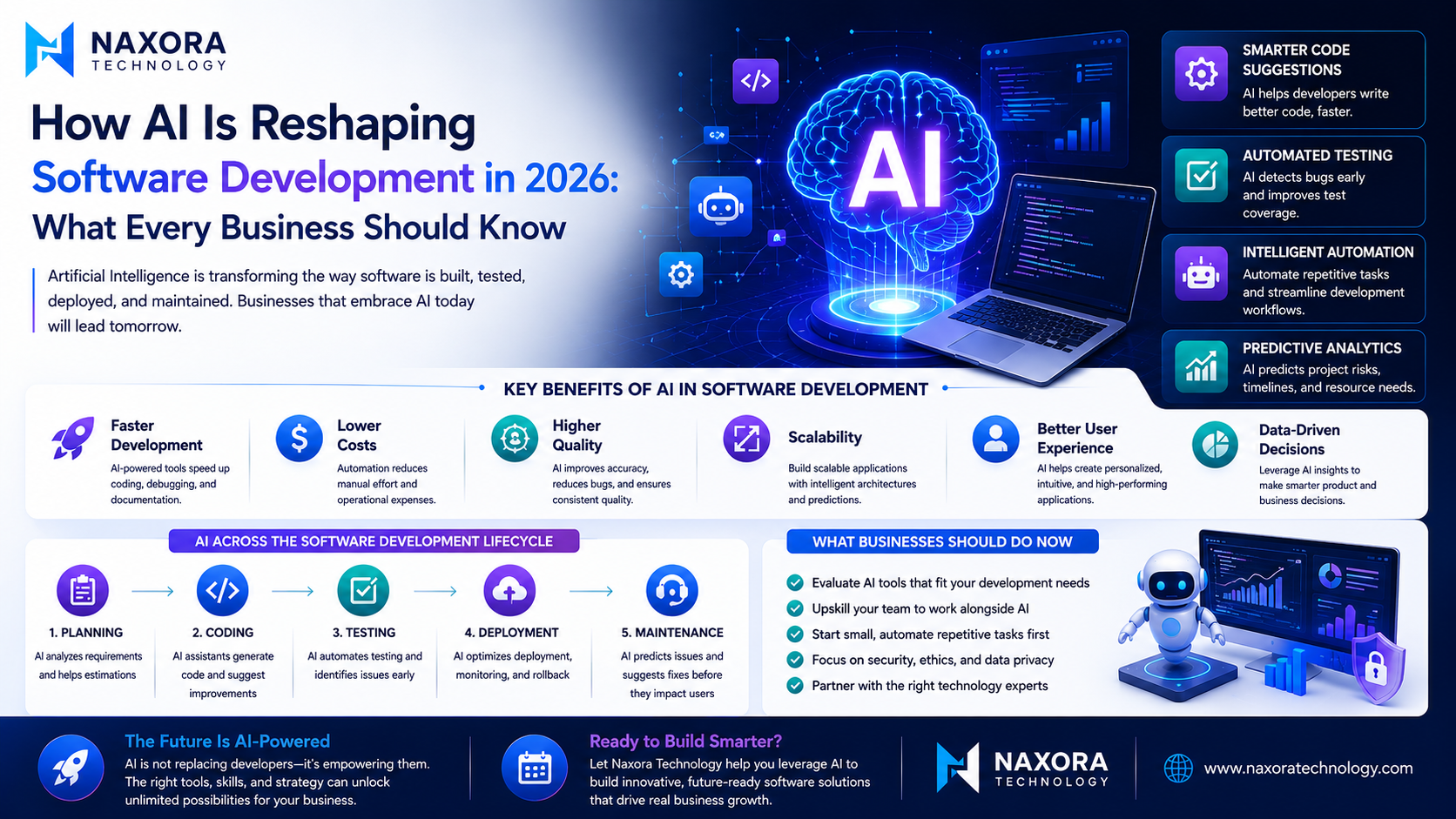
How AI Is Reshaping Software Development in 2026: What Every Business Should Know
Artificial Intelligence (AI) is no longer just a buzzword—it's transforming the way software is planned, built, tested, and maintained. In 2026, businesses across industries are leveraging AI to accelerate development, improve software quality, reduce operational costs, and deliver better digital experiences.
From AI-powered coding assistants and automated testing to predictive analytics and intelligent customer support, AI is becoming an essential part of modern software development. Companies that embrace AI today are better positioned to innovate faster and stay ahead of the competition.
Why AI Matters in Software Development
Software development has traditionally required significant time and resources. AI helps automate repetitive tasks, supports developers with intelligent recommendations, and enables teams to focus on solving complex business problems instead of routine coding activities.
Organizations using AI can:
Develop software faster
Improve code quality
Reduce development costs
Automate testing processes
Deliver projects more efficiently
Enhance customer experiences
1. Faster Software Development
AI-powered development tools assist developers by generating code suggestions, identifying syntax errors, and recommending best practices. These capabilities reduce manual effort and speed up the overall development lifecycle.
Benefits include:
Reduced coding time
Faster feature implementation
Improved developer productivity
Quicker project delivery
2. Smarter Code Reviews
Modern AI tools analyze code in real time to detect bugs, security vulnerabilities, and performance issues before deployment.
This allows development teams to:
Improve code quality
Maintain coding standards
Reduce technical debt
Prevent costly production issues
3. Automated Software Testing
Testing is one of the most time-consuming stages of software development. AI automates repetitive testing tasks, generates test cases, and identifies potential defects early in the development process.
Advantages include:
Faster testing cycles
Higher test coverage
Reduced human error
Improved software reliability
4. Better User Experience Through AI
AI helps businesses deliver personalized digital experiences by analyzing customer behavior and preferences.
Examples include:
Personalized product recommendations
Intelligent search functionality
AI-powered chatbots
Voice assistants
Predictive customer support
These features improve customer satisfaction and increase user engagement.
5. Intelligent Project Management
AI is improving project planning by analyzing historical data to predict timelines, identify potential risks, and optimize resource allocation.
Traditional ManagementAI-Powered ManagementManual planningPredictive schedulingStatic reportingReal-time insightsReactive decisionsData-driven recommendationsManual resource allocationOptimized resource planning
6. Enhanced Cybersecurity
Cyber threats continue to evolve, making security a top priority for businesses. AI strengthens cybersecurity by detecting unusual activities, identifying vulnerabilities, and responding to threats more quickly.
AI-driven security solutions help organizations:
Detect threats in real time
Prevent fraud
Identify suspicious behavior
Improve data protection
Reduce response time
7. AI-Powered Data Analytics
Businesses generate massive amounts of data every day. AI processes this data efficiently to uncover trends, predict customer behavior, and support informed business decisions.
Key benefits include:
Accurate forecasting
Better decision-making
Improved operational efficiency
Personalized marketing strategies
Industries Benefiting from AI Software Development
IndustryAI ApplicationsHealthcarePatient analytics, diagnostics, telemedicineFinanceFraud detection, risk assessment, automationRetailPersonalized recommendations, inventory forecastingEducationAdaptive learning, virtual tutorsManufacturingPredictive maintenance, quality controlLogisticsRoute optimization, demand forecasting
Challenges of AI Adoption
While AI offers significant benefits, businesses should also prepare for potential challenges:
Data privacy and security
Integration with existing systems
Initial implementation costs
Employee training
Ethical use of AI
Ongoing monitoring and governance
A successful AI strategy balances innovation with responsible implementation.
Best Practices for Implementing AI
Start with a clear business objective.
Identify processes that can benefit from automation.
Use high-quality and secure data.
Integrate AI gradually into existing workflows.
Monitor AI performance continuously.
Ensure transparency and ethical AI usage.
Partner with experienced AI development professionals.
Why Businesses Should Invest in AI Now
Businesses that adopt AI early can gain a significant competitive advantage. AI enables faster innovation, improves productivity, reduces costs, and helps organizations respond more effectively to changing market demands.
Rather than replacing software developers, AI enhances their capabilities by automating repetitive tasks and allowing them to focus on solving complex business challenges.
Why Choose Naxora Technology?
At Naxora Technology, we help businesses harness the power of Artificial Intelligence through custom software development, AI-powered applications, intelligent automation, cloud solutions, and scalable digital platforms.
Our team combines technical expertise with business understanding to deliver secure, innovative, and future-ready software solutions tailored to your goals.
Conclusion
AI is fundamentally changing software development in 2026. From intelligent coding assistance and automated testing to advanced analytics and enhanced cybersecurity, AI is helping businesses build smarter, faster, and more reliable software.
Organizations that embrace AI today will be better prepared for tomorrow's digital challenges, delivering better products, improving customer experiences, and driving sustainable growth.