
Website Speed Optimization: Why It Matters for SEO & Conversions
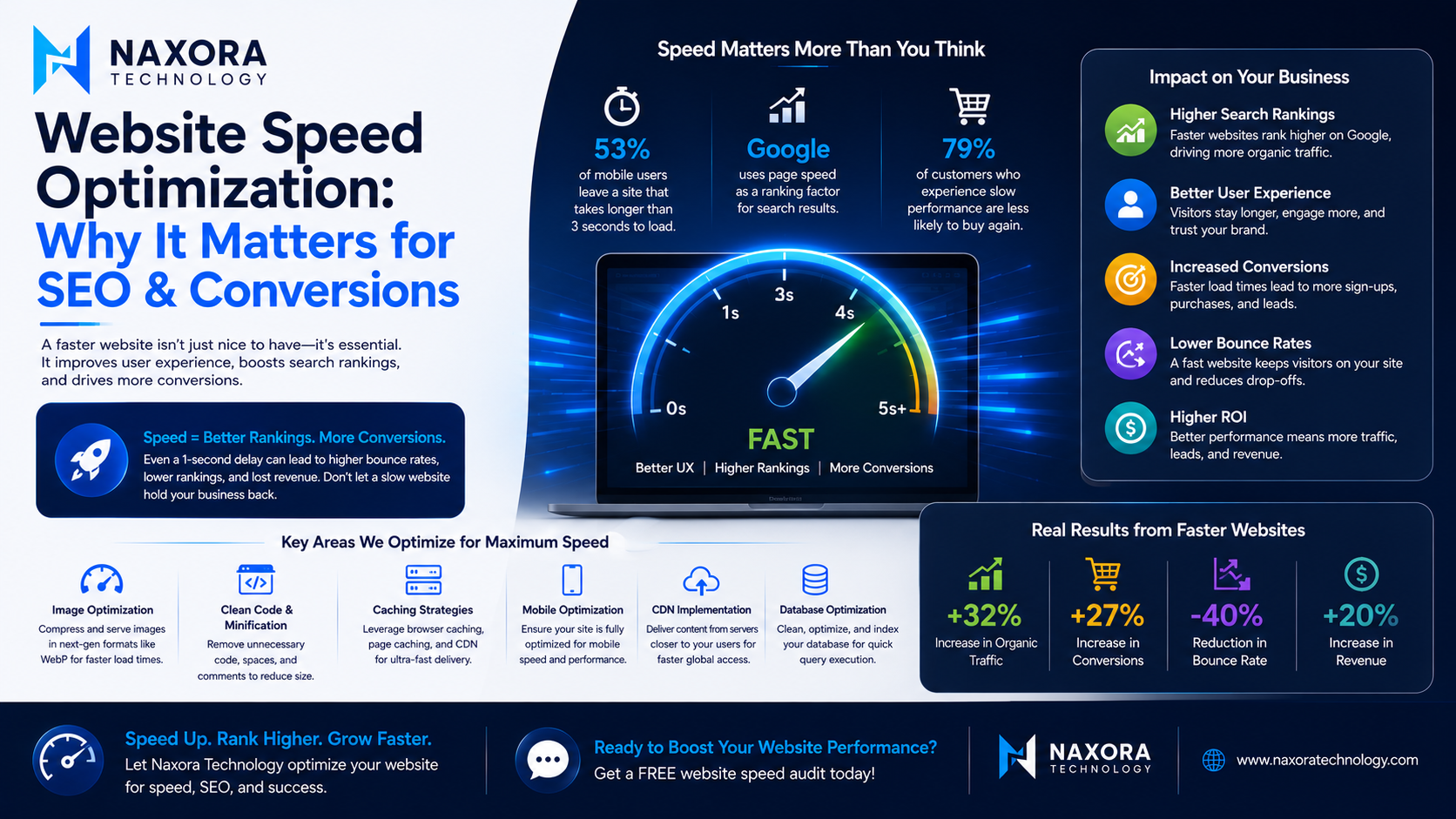
Website Speed Optimization: Why It Matters for SEO & Conversions
In today's digital world, users expect websites to load almost instantly. A delay of just a few seconds can lead to frustrated visitors, higher bounce rates, and lost revenue. Website speed is no longer just a technical metric—it directly impacts your search engine rankings, user experience, and business growth.
Whether you run an eCommerce store, a corporate website, or a SaaS platform, optimizing your website's speed should be one of your highest priorities. In this guide, we'll explore why website speed matters, how it affects SEO and conversions, and the best practices to improve your site's performance.
What Is Website Speed Optimization?
Website speed optimization is the process of improving how quickly a website loads and becomes interactive for users. It involves optimizing images, reducing unnecessary code, leveraging browser caching, improving server performance, and implementing modern web technologies.
The goal is to create a faster, smoother experience that keeps visitors engaged while improving search engine visibility.
Did you know? Even a one-second delay in page load time can reduce user satisfaction and negatively affect conversion rates.
Why Website Speed Matters
1. Better User Experience
Users expect websites to load quickly. If pages take too long, visitors are more likely to leave before interacting with your content.
Improves customer satisfaction
Reduces frustration
Encourages visitors to explore more pages
Increases session duration
2. Higher Search Engine Rankings
Google considers page speed as an important ranking factor. Faster websites generally provide a better user experience, making them more likely to rank higher in search results.
Website performance also affects Google's Core Web Vitals, which measure loading speed, responsiveness, and visual stability.
3. Increased Conversion Rates
Whether your goal is generating leads, selling products, or encouraging sign-ups, website speed directly influences conversions.
A fast-loading website builds trust and encourages users to complete actions instead of abandoning the page.
Website PerformanceBusiness ImpactFast LoadingHigher conversionsBetter User ExperienceMore engagementImproved SEOHigher organic trafficLower Bounce RateMore qualified leads
Common Reasons Websites Become Slow
Large unoptimized images
Too many HTTP requests
Unused JavaScript and CSS
Slow hosting servers
Poor database optimization
Too many third-party plugins
Lack of browser caching
No Content Delivery Network (CDN)
Best Practices for Website Speed Optimization
Optimize Images
Images often account for the largest portion of a webpage's size. Compressing and converting images to modern formats like WebP significantly reduces loading times.
Enable Browser Caching
Browser caching stores static resources on visitors' devices, allowing pages to load much faster on subsequent visits.
Minify CSS, JavaScript, and HTML
Removing unnecessary spaces, comments, and unused code reduces file sizes and improves loading speed.
Use a Content Delivery Network (CDN)
A CDN distributes your website across multiple servers worldwide, ensuring users receive content from the server closest to their location.
Choose High-Performance Hosting
Your hosting provider plays a significant role in website performance. Modern cloud hosting typically delivers better reliability and speed.
Implement Lazy Loading
Lazy loading delays loading images and videos until users scroll near them, improving initial page load speed.
Understanding Core Web Vitals
Core Web Vitals are Google's metrics for evaluating user experience.
MetricPurposeLargest Contentful Paint (LCP)Measures loading performanceInteraction to Next Paint (INP)Measures responsivenessCumulative Layout Shift (CLS)Measures visual stability
Optimizing these metrics improves both SEO and overall user satisfaction.
Benefits of a Fast Website
Higher Google rankings
Improved user experience
More leads and conversions
Lower bounce rates
Better mobile performance
Higher customer trust
Improved accessibility
Greater business credibility
Website Speed Optimization Checklist
Compress all images.
Use WebP image format.
Enable Gzip or Brotli compression.
Implement browser caching.
Use a CDN.
Reduce unnecessary JavaScript.
Optimize CSS delivery.
Upgrade hosting if needed.
Enable lazy loading.
Monitor Core Web Vitals regularly.
Why Choose Naxora Technology?
At Naxora Technology, we build high-performance websites that are optimized for speed, SEO, and user experience from day one. Our team focuses on modern development practices, Core Web Vitals optimization, responsive design, and scalable architecture to help businesses achieve better rankings and higher conversion rates.
Whether you're launching a new website or improving an existing one, we deliver solutions designed for long-term growth.
Conclusion
Website speed optimization is more than just improving loading times—it's about creating a better experience for your users while maximizing your business potential. A fast website improves search engine rankings, increases customer engagement, and drives more conversions.
Investing in website performance today ensures your business stays competitive in an increasingly digital marketplace.
Ready to Build a Faster Website?
If your website is slow or underperforming, now is the perfect time to optimize it. A high-performance website not only improves SEO but also helps convert more visitors into loyal customers.
Contact Naxora Technology today to create a fast, secure, and scalable website that drives real business results.