Why Every Business Needs Digital Transformation in 2026
Why Every Business Needs Digital Transformation in 2026
Digital transformation is no longer a luxury reserved for large enterprises—it's a necessity for businesses of every size. In 2026, organizations that embrace digital technologies are outperforming competitors by delivering better customer experiences, improving operational efficiency, and making smarter business decisions.
Whether you're a startup, small business, or enterprise, digital transformation enables you to adapt to changing customer expectations and remain competitive in an increasingly technology-driven world.
What Is Digital Transformation?
Digital transformation is the process of integrating modern digital technologies into every aspect of a business. It involves replacing manual processes with intelligent systems, improving workflows, leveraging cloud computing, adopting artificial intelligence, and using data to drive better decisions.
Rather than simply digitizing existing processes, digital transformation reshapes how businesses operate, serve customers, and create value.
Why Digital Transformation Matters in 2026
Customer expectations have changed dramatically over the past few years. Businesses are expected to provide faster services, personalized experiences, and seamless digital interactions across multiple channels.
Companies that continue relying on outdated systems often struggle with inefficiency, higher operational costs, slower decision-making, and reduced customer satisfaction.
Digital transformation helps organizations stay agile, scalable, and ready for future growth.
Key Technologies Driving Digital Transformation
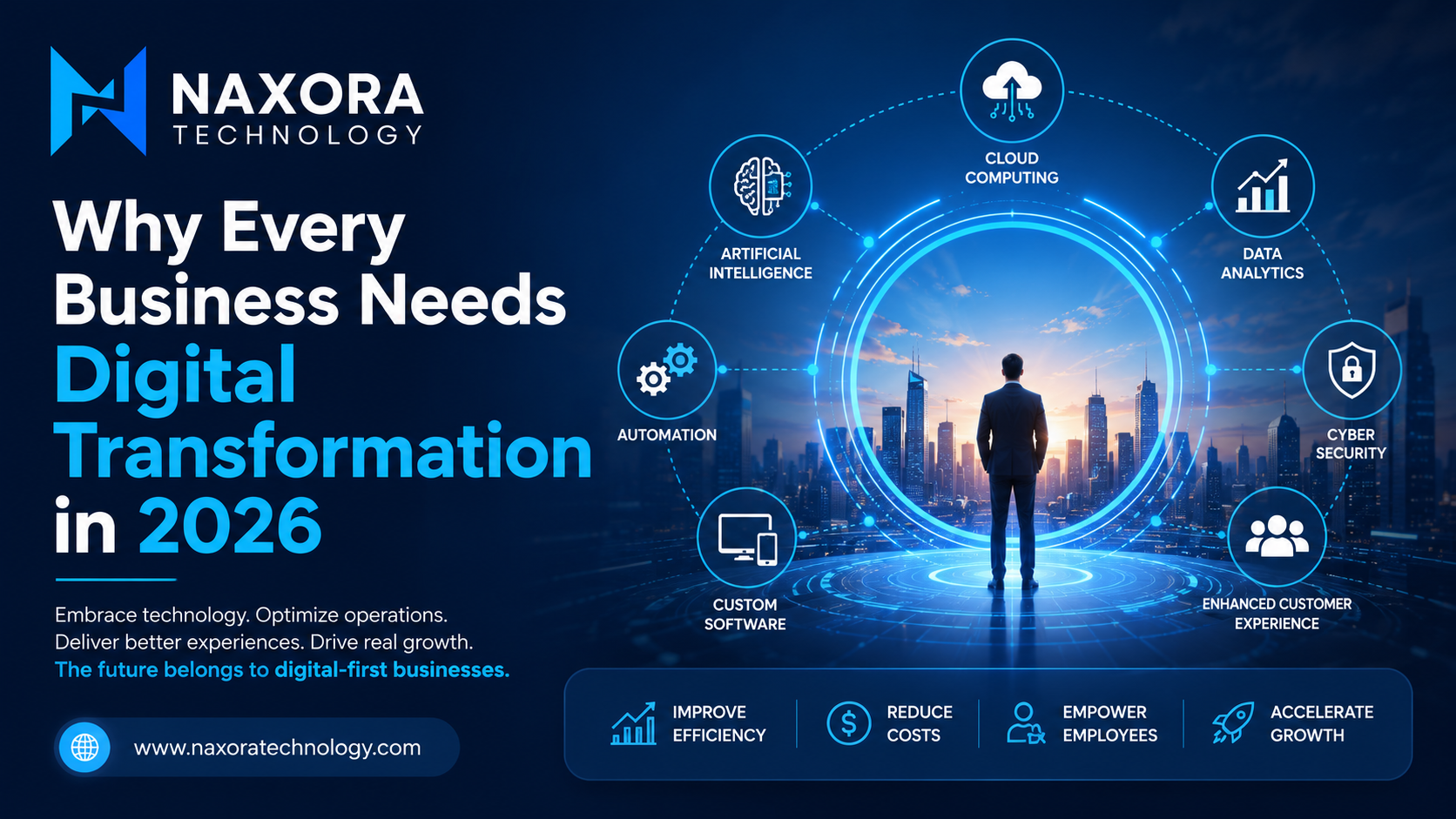
1. Artificial Intelligence & Automation
AI-powered tools and intelligent automation eliminate repetitive tasks, improve productivity, and enable employees to focus on higher-value work. Businesses can automate customer support, document processing, reporting, and decision-making with modern AI solutions.
2. Cloud Computing
Cloud platforms provide businesses with secure, scalable infrastructure while reducing hardware costs. Teams can collaborate from anywhere, deploy applications faster, and access business data in real time.
3. Data Analytics
Data has become one of the most valuable business assets. Advanced analytics help organizations understand customer behavior, monitor performance, forecast trends, and identify new opportunities.
4. Cybersecurity
As businesses become increasingly digital, protecting sensitive information is more important than ever. Modern cybersecurity solutions help defend against cyber threats while ensuring compliance with industry regulations.
5. Custom Software Solutions
Every business has unique processes. Custom software enables organizations to streamline operations, improve efficiency, and integrate multiple systems into a single digital ecosystem.
Benefits of Digital Transformation
Improved Customer Experience – Deliver faster, personalized, and seamless services.
Higher Productivity – Automate repetitive tasks and optimize workflows.
Reduced Operational Costs – Minimize manual work and eliminate inefficiencies.
Better Decision Making – Use real-time business insights and analytics.
Greater Scalability – Grow your business without significantly increasing operational complexity.
Competitive Advantage – Stay ahead by adopting innovative technologies before competitors.
Signs Your Business Needs Digital Transformation
You may need digital transformation if your business experiences:
Manual and repetitive workflows
Disconnected software systems
Slow customer response times
Difficulty accessing business data
Frequent operational errors
Limited remote work capabilities
Challenges scaling your operations
Industries Benefiting from Digital Transformation
Healthcare – Digital patient records, telemedicine, and AI-assisted diagnostics.
Retail – E-commerce platforms, inventory automation, and personalized shopping experiences.
Finance – Digital banking, fraud detection, and intelligent risk management.
Manufacturing – Smart factories, predictive maintenance, and IoT-enabled production.
Education – Online learning platforms and digital collaboration tools.
Real Estate – Virtual property tours, CRM systems, and automated lead management.
Common Challenges During Digital Transformation
Although the benefits are significant, businesses often encounter challenges when implementing digital transformation initiatives.
Resistance to organizational change
Legacy software limitations
Data migration complexities
Cybersecurity concerns
Budget constraints
Skills and training gaps
A well-planned strategy, combined with the right technology partner, helps businesses overcome these challenges and achieve successful transformation.
How to Start Your Digital Transformation Journey
Evaluate your existing business processes.
Identify operational bottlenecks.
Define clear business goals.
Select the right technologies.
Invest in scalable cloud infrastructure.
Implement automation where possible.
Train employees on new systems.
Continuously measure performance and optimize processes.
Why Partner with a Technology Company?
Digital transformation involves much more than implementing new software. Businesses need experienced technology partners who understand strategy, software development, cloud infrastructure, cybersecurity, AI integration, and long-term scalability.
Working with a trusted IT company helps reduce implementation risks, accelerate deployment, and ensure technology investments deliver measurable business value.
The Future of Digital Transformation
The future of business is increasingly digital. Emerging technologies such as AI agents, machine learning, edge computing, blockchain, and intelligent automation will continue reshaping industries over the coming years.
Organizations that invest in digital transformation today will be better positioned to adapt to changing markets, meet customer expectations, and achieve sustainable growth.
Conclusion
Digital transformation has become one of the most important drivers of business success in 2026. By embracing modern technologies, businesses can improve efficiency, reduce costs, strengthen customer relationships, and unlock new growth opportunities.
Whether you're modernizing legacy systems, developing custom software, migrating to the cloud, or implementing AI-powered automation, the right digital transformation strategy can help your business stay competitive in an increasingly digital world.